3D Animate US | Published: Monday, March 23, 2026 | Target Keyword: how to get 3D animated video for business | ~1,900 words
You have decided you want a 3D animated video. Maybe you have seen a competitor deploy one with striking results. Maybe your product has features that photography simply cannot communicate. Maybe your marketing team has been asking for something that moves, breathes, and commands attention in a way that your current visual assets do not.
The challenge is not deciding to get a 3D animated video. The challenge is knowing how to get one — how to navigate the process from initial idea to finished asset without overpaying, missing the brief, or spending months in revision cycles with a studio that was not the right fit.
This is the guide that answers that challenge. From the decisions you need to make before you contact a single studio, through every stage of production, to the moment you receive your final files — here is exactly how the process works and how to get the best possible outcome.
Step 1: Define What You Actually Need

The single most common mistake businesses make when commissioning 3D animation is beginning the studio search before they have defined what they are actually trying to achieve. ‘We need a 3D video’ is not a brief — it is a medium. The brief is what the video needs to do.
Before you contact any studio, answer the following questions with as much specificity as you can manage.
⦁ What is the primary objective? Are you trying to generate product awareness, explain a complex feature, reduce customer confusion at the point of purchase, support a sales pitch, or anchor a product launch campaign? The objective shapes every subsequent production decision.
⦁ Who is the audience? The stylistic register, pacing, and information density of a 3D animation for a retail consumer audience is fundamentally different from one targeting a pharmaceutical procurement committee or a commercial real estate investor.
⦁ Where will it live? A hero video for a website landing page requires different specifications than a six-second paid social ad or a trade show loop. Platform dictates duration, format, aspect ratio, and audio approach.
⦁ What does success look like? Define your success metric before production begins. Conversion rate on a landing page. Engagement rate on social. Time spent on a product detail page. Having a measurable objective keeps the production focused.
⦁ What is your realistic budget? Be honest with yourself before the first studio conversation. 3D animation quality scales with investment. Knowing your actual budget range enables studios to propose solutions that are genuinely achievable within your parameters.
The quality of your 3D animation brief is the most accurate predictor of the quality of your final video. Invest the time to get it right before any studio conversations begin.
Step 2: Understand the Main Types of 3D Animation
3D animation is not a single product. Before approaching studios, familiarize yourself with the type of animation most relevant to your objective — this will make your brief far more specific and your studio conversations far more productive.
Animation Type Best For
Product Visualization E-commerce, product launches, retail advertising, packaging campaigns
Explainer Animation SaaS, B2B products, complex services, onboarding, investor pitches
Architectural Walkthrough Real estate development, construction, interior design, property investment
Brand / Commercial Film Awareness campaigns, brand storytelling, broadcast advertising
Character Animation Brand mascots, consumer campaigns, children’s marketing, app engagement
Medical / Scientific Healthcare marketing, patient education, pharmaceutical sales, research comms
Training and Corporate Employee onboarding, safety instruction, process documentation
| Animation Type | Best For |
|---|---|
| Product Visualization | E-commerce, product launches, retail advertising, packaging campaigns |
| Explainer Animation | SaaS, B2B products, complex services, onboarding, investor pitches |
| Architectural Walkthrough | Real estate development, construction, interior design, property investment |
| Brand / Commercial Film | Awareness campaigns, brand storytelling, broadcast advertising |
| Character Animation | Brand mascots, consumer campaigns, children’s marketing, app engagement |
| Medical / Scientific | Healthcare marketing, patient education, pharmaceutical sales, research comms |
| Training and Corporate | Employee onboarding, safety instruction, process documentation |
Most business 3D animation projects fall into one of the first three categories. If you are unsure which type your project needs, a reputable studio can help you identify the right approach during a consultation call — but it helps to arrive with at least a hypothesis.
Step 3: Establish Your Budget Range

3D animation is a craft-intensive production process, and quality is directly linked to investment. The following framework will help you calibrate your expectations and have honest conversations with studios.
| Budget Range | What to Expect |
|---|---|
| Under $5,000 | Very simple product spin or logo animation; limited complexity; suitable for single-platform use |
| $5,000 – $15,000 | Quality product visualization or short explainer; one to two scenes; solid professional finish |
| $15,000 – $40,000 | Multi-scene production; high-quality photorealistic rendering; strong creative development; multiple format deliverables |
| $40,000 – $100,000 | Cinematic-quality commercial; complex character or mechanical animation; broadcast-ready production |
| $100,000+ | Full campaign production; enterprise-level scope; multiple hero assets and derivatives; ongoing studio relationship |
It is worth noting that budget conversations with reputable studios are not adversarial. A good studio will tell you what is genuinely achievable within your parameters — and will be honest when a project’s scope exceeds what a given budget can deliver at the quality level required. Budget transparency from the outset is the foundation of a productive studio relationship.
Step 4: Find and Evaluate the Right Studio
With a clear brief and a realistic budget range, you are ready to approach studios. Here is how to evaluate them effectively.
Portfolio Alignment
The most important indicator of whether a studio is the right fit is whether their existing work demonstrates capability in the style, quality level, and subject matter your project requires. Do not commission a studio to produce work that is significantly different from anything in their portfolio — this is the fastest path to disappointment on both sides.
Industry and Use-Case Experience
Studios that have produced animation in your industry or for your type of use case bring domain knowledge that materially reduces friction in production. They understand the regulatory considerations in medical animation, the spatial requirements of architectural visualization, or the brand-compliance demands of enterprise marketing. This experience shows up in shorter production timelines and fewer revision cycles.
Process Transparency
Ask any studio you are evaluating to walk you through their production process. How do they handle revisions? What are the milestone review points? How do they manage scope creep? A studio that can answer these questions clearly and confidently has a professional operation. A studio that is vague about process is a risk.
Communication Standards
Animation is a collaborative medium. You will spend significant time in dialogue with your studio — reviewing storyboards, providing feedback on motion tests, approving lighting and texturing. How they communicate in the sales process is an accurate preview of how they will communicate in production. Responsiveness, clarity, and professionalism in pre-sales is a strong positive signal.
U.S.-Based vs. Offshore
Offshore studios can offer lower headline rates, but the full cost of an offshore engagement — including time-zone management overhead, communication friction, legal ambiguity, and quality inconsistency — is often higher than it appears. For business-critical animation, the accountability and alignment that come with a U.S.-based studio are worth the investment differential.
Step 5: Prepare a Production-Ready Brief
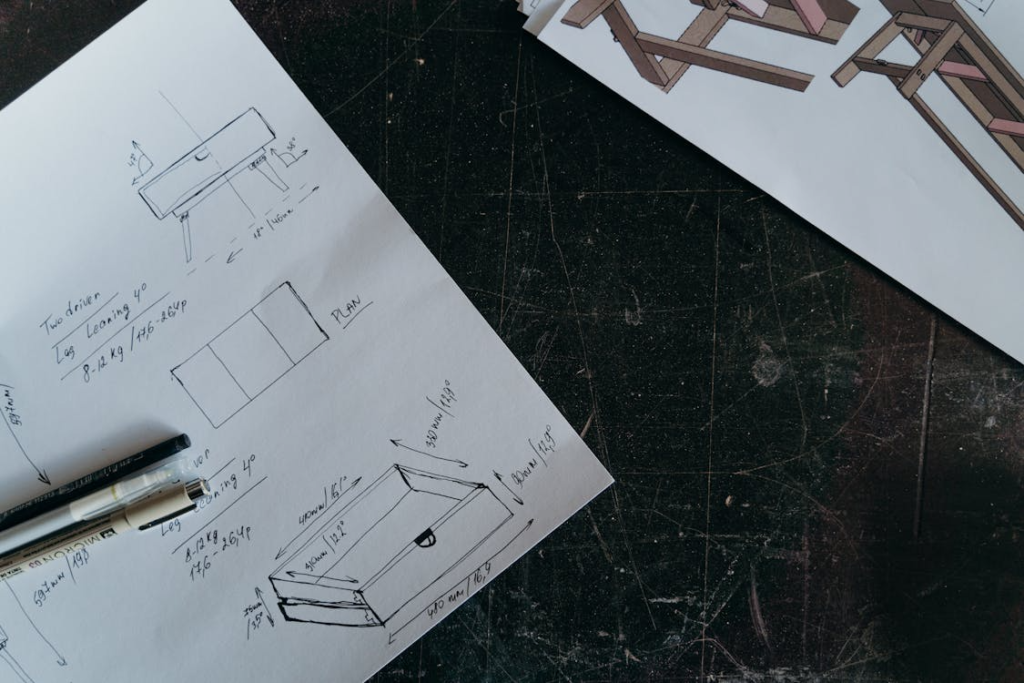
Before your first studio meeting, prepare a written brief that covers the following elements. The more complete your brief, the more accurate your quotes will be and the smoother your production will run.
⦁ Project objective: What must this video achieve, and how will you measure it?
⦁ Target audience: Who is watching, and what do you need them to feel, think, or do after watching?
⦁ Duration and platform: How long should the video be, and where will it be used?
⦁ Style reference: Links to animations you admire — even from other industries — are enormously useful for calibrating creative direction
⦁ Timeline: When is the final deliverable needed? Work backward from that date to set production start
⦁ Budget range: Be specific. Saying ‘we have flexibility’ costs everyone time
⦁ Deliverable formats: What file formats, aspect ratios, and resolutions do you need?
⦁ Brand assets: Logo files, brand guidelines, color palettes, and font specifications
Step 6: Navigate the Production Process
Once you have selected a studio and signed a production agreement, the project moves through a structured sequence of phases. Your active participation at each review milestone is critical — delayed feedback is the primary cause of missed deadlines in animation production.
Pre-Production Review
This is your most important review point. The storyboard and animatic — a rough timed version of the animation — define every visual decision that follows. Changes at this stage are inexpensive. Changes after modeling and animation have begun are costly. Invest serious attention in the pre-production review.
Work-in-Progress Reviews
Most studios schedule milestone reviews at key production points: after initial modeling, after a motion test, after a lighting test. Provide consolidated, specific feedback at each milestone. ‘I would like the camera to slow down as it approaches the product at 0:18’ is useful feedback. ‘I am not sure about it’ is not.
Final Delivery
Confirm the delivery specifications with your studio before production begins — format, resolution, aspect ratio, color space, and audio specifications. Last-minute format changes are avoidable with a clear brief, but they can introduce delays if discovered only at the delivery stage.
Step 7: Maximize the Value of Your Animation Asset

Your 3D animation is a reusable asset, not a one-time production. When you receive your final files, also ensure you receive the underlying 3D project files or, at minimum, a high-resolution master that enables format derivatives. Plan from the outset how you will adapt the asset across platforms — cut-downs, silent versions, still-frame extractions, and format variants all extend the commercial life of a single production investment.
You Are Ready to Animate
Getting a 3D animated video for your business is a process, not a transaction. But it is a process with a clear structure — and businesses that follow that structure consistently get better results at better value than those who approach it reactively.
Define your objective. Establish your budget. Find the right studio. Prepare a thorough brief. Stay actively engaged through production. And treat your final asset as the beginning of a content infrastructure, not the end of a project.
3D Animate US works with businesses at every stage of this process — from initial brief development through final delivery and asset management. If you are ready to start, or simply want to explore what a 3D animation project would look like for your brand, reach out to our team for a free consultation.