
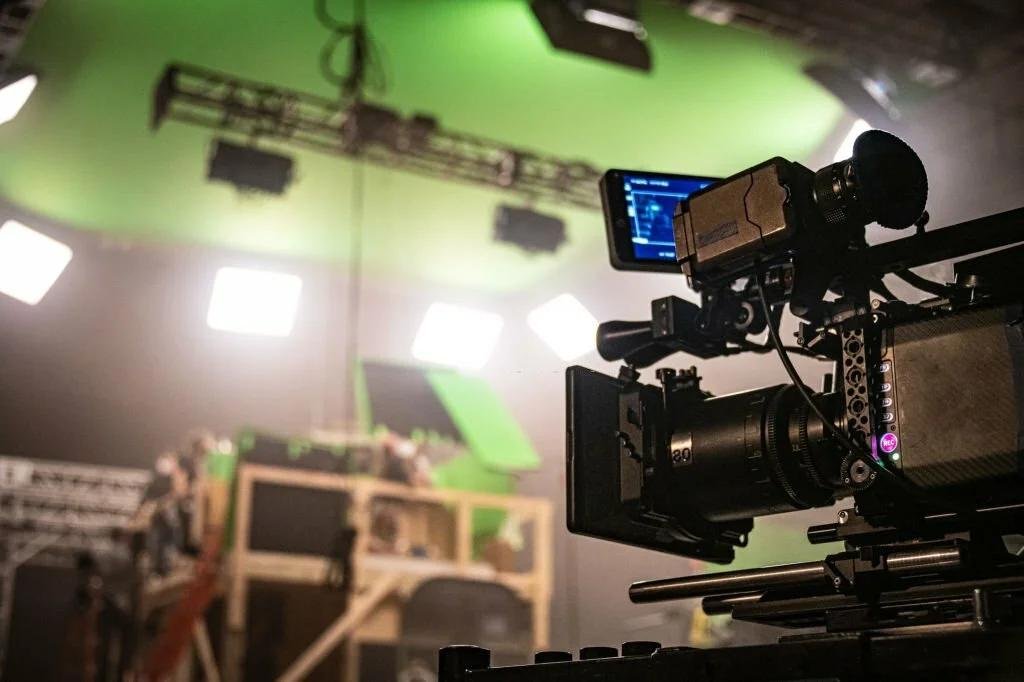
Live-action video has been the default commercial format for most of advertising history. Film a compelling visual sequence, add a voiceover and music, deliver a message. The formula is proven, the production ecosystem is mature, and the output — at professional standard — can be genuinely compelling.
But the formula has constraints that become increasingly apparent the more specific, complex, or ambitious the commercial brief becomes. A product that needs to be shown inside-out. A sequence that requires a camera angle physically impossible to achieve. A concept that demands a visual world the real world cannot provide. A production that needs to be delivered in twelve regional color variants. In each of these cases, live-action production becomes either insufficient or prohibitively expensive — and 3D animated commercials become not just an alternative, but the superior choice.
This article examines what makes 3D animated commercials structurally different from live-action production, where they outperform, and how brands should think about choosing between the two formats — or combining them.
The Fundamental Difference: What Each Format Can Show

Live-action video is constrained by physical reality. It can only show what exists, from angles that a real camera can reach, under lighting conditions that real lights can produce, featuring objects and environments that can be physically assembled in the same space at the same time. These constraints are often invisible — most commercial briefs are written with live-action in mind and shaped around what live-action can do. But they are real, and they compound with creative ambition.
3D animated commercials operate in a different reality. The camera can be anywhere. The product can be opened, sectioned, assembled, and transformed. The environment can be designed from first principles to serve the creative concept. Physical impossibilities — a camera passing through a solid object, a microscopic detail magnified to hero scale, a product being built from its component atoms — are production decisions, not creative limitations. The constraint is not physical reality but production time and budget.
| Capability | Live-Action | 3D Animation |
| Show product internals | Not possible without destruction | Fully capable — cutaway views, exploded assemblies |
| Pre-production visuals | Product must physically exist | Can be produced from CAD or design files |
| Color/variant production | Separate shoot per variant | Material swap in 3D file — minutes per variant |
| Camera placement | Constrained by physical space | Unlimited — any angle, any path, any scale |
| Environment control | Location or set build required | Virtual environment; every element controllable |
| Visual effects integration | Requires compositing; expensive | Native to 3D workflow; no compositing required |
| Reshoots for changes | Full shoot required | Model update and re-render; no shoot |
| Microscopic or macro scale | Requires specialized equipment | Standard 3D production capability |
Where 3D Animated Commercials Outperform Live Action

When the Product Is the Concept
For commercials where the product itself — its design, its engineering, its materials, its operation — is the primary creative element, 3D animation is almost always the superior format. A product that rotates in a perfectly controlled environment, with lighting designed to reveal every design detail, in a color palette calibrated to the brand’s visual identity, performing a demonstration of its key feature in slow motion — this is a creative brief that live-action can approximate and 3D animation can perfect.
The automotive industry understood this early. Luxury goods brands followed. Consumer electronics has been there for years. In each of these categories, the visual standard for product commercials is set by 3D animation precisely because the product is the argument, and 3D is the most effective format for making that argument visually.
When the Visual Concept Requires the Impossible
Some of the most effective commercial concepts involve visual sequences that are physically impossible to film. A perfume whose fragrance becomes a visual landscape. A food product deconstructing itself into its ingredients. A technology device assembling from its component parts. A vehicle driving through an environment that does not exist. All of these are 3D animation briefs — not because live-action could not attempt them with extensive VFX work, but because 3D animation produces them more efficiently, more controllably, and often more beautifully.
When Scale and Consistency Across Variants Are Required
A brand launching a product in 12 colorways, across 6 markets, with platform-specific format requirements for each, is facing a production challenge that live-action addresses through repetition — 12 shoots, 6 location variants, dozens of post-production format deliveries. 3D animation addresses it through parameterization: one production, variant outputs produced through model and scene adjustments rather than re-shoots. The economics at this scale strongly favor 3D.
When Timeline or Location Access Is Constrained
Live-action production requires coordinating talent, locations, equipment, and crew in the same physical space at the same time. Any one of these elements can delay or derail production. 3D animation has no such coordination dependencies. There are no location permits, no weather dependencies, no talent scheduling conflicts, no equipment availability issues. For campaigns with tight timelines or involving products, locations, or scenarios that are difficult to access physically, 3D animation’s independence from physical logistics is a significant production advantage.
| A 3D animated commercial is not a compromise version of a live-action concept. At its best, it is a concept that only animation can execute — and the brief should be written with that ambition from the start. |
Where Live Action Retains Its Advantages

A complete account of this comparison requires acknowledging where live-action production retains genuine advantages over 3D animation — because choosing between them honestly requires understanding both.
Human Authenticity and Emotional Connection
Real human beings on screen create emotional resonance in a specific way that 3D character animation, even at high quality, approaches but rarely fully replicates. The spontaneity of a genuine performance, the authenticity of a real face expressing real emotion, the credibility of a person using a product in their actual daily environment — these qualities are live-action’s native territory. For commercials where the emotional driver is human connection, testimonial authenticity, or the relatability of real people in real situations, live-action is typically the right choice.
Certain Food, Beauty, and Tactile Categories
Some product categories depend on sensory associations that photography and live-action footage convey with a specific kind of visceral immediacy that 3D animation — even at photorealistic quality — can find difficult to match: the steam rising from freshly cooked food, the texture of a fabric, the pour of a liquid, the application of a cosmetic product. These sensory cues are deeply associated with live footage, and audiences read them differently in 3D contexts even when the technical quality is high.
Lower Budget, Fast Turnaround Requirements
For certain commercial briefs where the creative concept is straightforward and the production timeline is short, live-action can be faster and less expensive to produce than a high-quality 3D animation. A testimonial-style product commercial, a simple lifestyle vignette, a behind-the-scenes brand film — these can often be produced more efficiently in live-action than in 3D.
The Hybrid Approach: Combining 3D Animation and Live Action
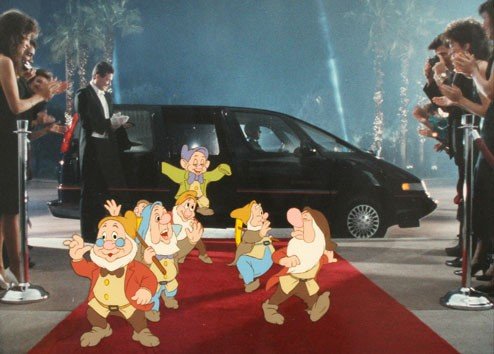
The most strategically sophisticated brands increasingly choose not between live-action and 3D animation but how to combine them. A live-action human performance anchored by a 3D product visualization that no camera could capture. A photorealistic 3D product hero shot composited into a real-world environment. A live-action lifestyle scene transitioning to a 3D internal mechanism reveal. These hybrid productions access both formats’ strengths simultaneously, and the compositing and post-production capabilities of modern production pipelines make the integration increasingly seamless.
For brands operating with moderate production budgets and ambitious creative briefs, the hybrid model often provides the best outcome per dollar: live-action for the human and emotional elements, 3D animation for the product-specific and conceptually impossible elements.
How to Decide: The Brief-First Framework
The decision between 3D animation and live-action should always begin with the brief — specifically, with the question of what the commercial needs to show and what emotional response it needs to produce. A useful decision framework:
- Does the commercial need to show the product’s interior or mechanism? 3D animation is required.
- Does the product not yet exist physically? 3D animation is the only option.
- Does the concept require physical impossibility — impossible camera angles, scale changes, visual metaphor? 3D animation is better suited.
- Does the commercial require multiple color or configuration variants? 3D animation is significantly more efficient.
- Does the commercial depend on human performance and emotional authenticity? Live-action or hybrid is more appropriate.
- Is the timeline extremely short and the concept straightforward? Live-action may be faster and more cost-efficient.
- Does the concept combine product demonstration with human context? Hybrid is likely the optimal approach.
Animate What the Camera Cannot Capture
The most compelling argument for 3D animated commercials is the simplest one: they can show things that cameras cannot capture. The visual possibilities of the format expand with creative ambition rather than shrinking under it. For brands with products, concepts, or creative visions that exceed what live-action can deliver — or that demand a visual standard that only 3D production can reach — the animated commercial is not a second choice. It is the right tool for the brief.
3D Animate US produces 3D animated commercials for brands across the United States, from concept through final delivery. If you have a brief that needs the full capability of 3D animation, contact our team.